

Banbury Almshouse Charity
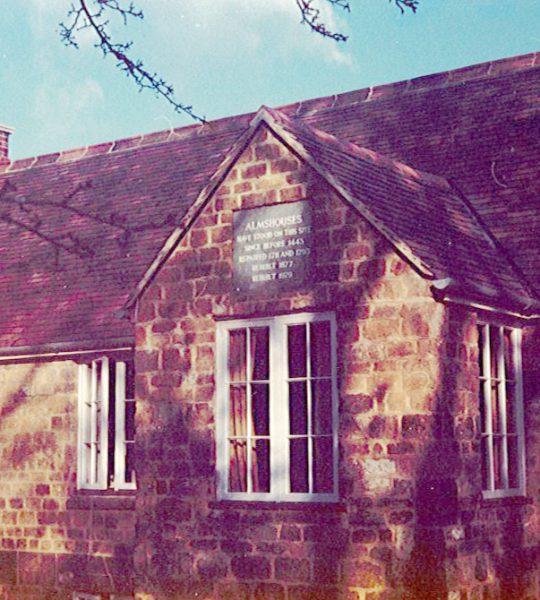
ALMSHOUSES NOW KNOWN AS ST. MARY’S CLOSE, CHURCH WALK, BANBURY 
The first Charity established in Banbury, which is now part of the Banbury Charities, is the Almshouse Trust. Such Trusts to establish homes for the poorer elderly of the population are among the earliest forms of organised charity in Britain. Most old Towns have their Centuries old Almshouses, and the need today is as important as ever, and primarily through the aegis of the National Association of Almshouses, new homes are still being built and, even more importantly, old houses are being modernised.
It is known that Almshouses stood in the lower part of the Churchyard in Banbury since at least 1443. This date is the earliest known reference, when the then Prebendary of Banbury – Prebendary John Forrest – made out a Will which, amongst other items, bequeathed £66.13.4d to support persons “in my Almshouse at Banbury”. The reference to “my Almshouse” would suggest that he instituted the Almshouse sometime before that date. Unfortunately, there is little reference to the Almshouses for nearly three hundred years after this except that it is known two years after the death of the Prebendary in 1446 that the newly found Guild of St. Mary was given permission to hold land and money to support the Chaplain and eight poor persons dwelling in the Almshouse. In a Charity Decree of the 20th January 1602 it was stated that “an Almshouse near unto the churchyard which is employed to lodge the most poor, old and impotent people there in the Town”.
In 1711 the Almshouses were repaired by Lord North, having been in a ruinous condition. The vestry discussed a rebuild in 1793. However, a good repair was considered all that was necessary, which was funded from the Poor Rate. It is interesting to note that it was the vestry that induced the scheme, for at this period the vestry in Banbury was probably the most influential organisation in the Town and probably had been for much of the Century. It’s power waned dramatically over the next one hundred years as the Corporation was made responsible in law for much more of local affairs.
The renovated Almshouse now contained twelve apartments, consisting of two blocks, which must have been indifferently rebuilt, for in 1877 it was considered unsafe. It is believed that in order to have sufficient capital for a new building, the Charity Commissioners were approached to amalgamate the Joshua Sprigg, Metcalfe, Smyth, Widows Grants and Almshouse Charities into one, called the Banbury Almshouse Charity. This was sanctioned in March 1882, together with an authorisation to reconstruct the Almshouse, utilising the combined funds, which amounted to approximately £800.00 and an annual annuity of £9.13.11d. The cost of the new building was £440.00 and the balance invested for the 12 Almspeople “who shall be poor widows or spinsters of good character, and of not less than 60 years of age, who shall have resided in the Borough of Banbury for not less than three years and who, from age, ill health, accident or infirmity, shall be unable to maintain themselves by their own exertions; with a preference to those persons who, being otherwise qualified as aforesaid, shall have become reduced by misfortune from better circumstances”. Although now the flats are not solely for women, the general intentions of the rest of this clause are perpetuated by the present Trustees. Some years later the number of residents was reduced to six to give additional space for each occupant.
In 1895 the Charity was amalgamated to form Banbury Charities, although in practice the same Trustees as the Bridge Estate and Lady Arran had been operating the existing scheme some years before.
In 1973 the proposed private development of the White Lion Hotel could only take place if a turning circle was available for vehicles, although it was to be pedestrianised. This necessitated taking part of the “garden” of the 66 High Street premises owned by the Charities. This was agreed by the Trustees insofar that a similar parcel of land was exchanged alongside the Almshouse. This is approximately the piece of land which is the present courtyard and stairway of the modernised Almshouse. From 1973 vacancies were not advertised or filled and in 1978 the plans for the virtually new building were put into effect by the Builder J.W. Rogers & Co. Limited of Banbury. Only one occupant was still in occupation and she was re-housed by the Cherwell District Council and she refused an offer of a flat on completion.
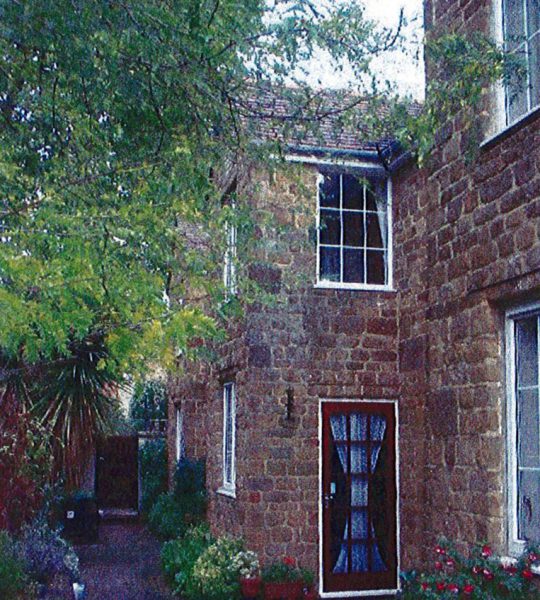
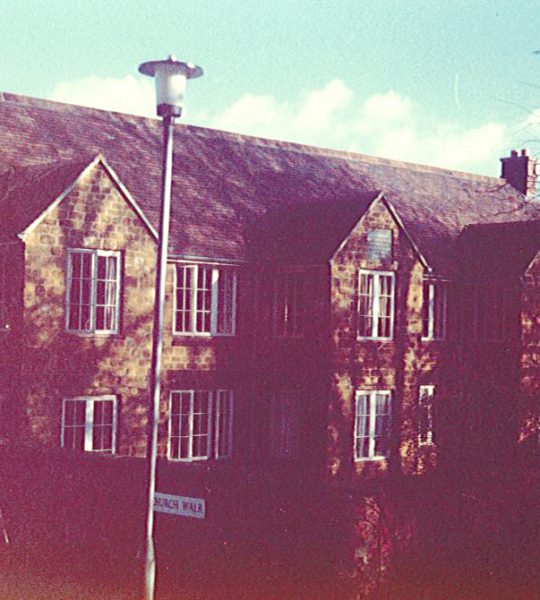
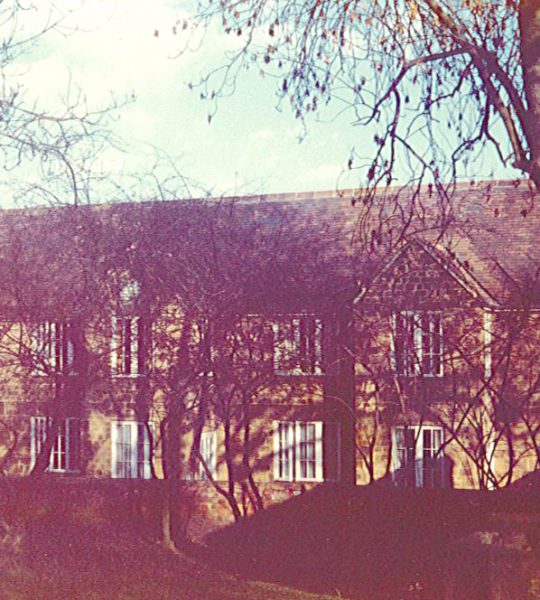
The rebuilt St. Mary’s Close, are a credit to the Architect Mr. C.B. Martindale and only minor adjustments were made after occupation in April 1979. They were well built; indeed, the foreman Mr. E. Kaye received a Construction Award from the Building Trades Federation, and he was pleased to attend a formal Dinner in London for the occasion of the presentation.
The building costs of the six modernised flats with fees and equipment was £52,500.00. It was virtually a new building, except that three outer walls were utilised.
The title of St. Mary’s Close was given by Mr. D. Repton (Banbury Postmaster) when the Trustees decided to give the Flats another name other than Almshouses.
The communal central heating system gives a satisfactory supply of hot water for heating and tap use.
Unlike the occupants of the previous five centuries, a weekly maintenance charge is now made to cover not only operating costs, but also a recommended amount (National Association of Almshouses in conjunction with the Charity Commissioners) is placed actually into an Extraordinary Repair Fund to pay for a complete modernisation in the distant future when the present facilities appear antiquated.
Until the 1970’s the residents paid no rents, indeed a small allowance was given and signed for each week. In 1900 £4.00 was paid for bread for the year to a local baker, this was probably enough to supply the residents with a regular supply of small loaves.
Now a small grant is given at Christmas to the residents. It is the aim of the Trustees to have a range of ages with the hope that the relatively younger residents will help the more elderly. The site is very much appreciated by the occupants, unable to walk far to the shops and Banks, but still seeking their full independence.
The Clerk and the Trustees can be proud of their achievement.